
Does reading still matter?
Holiday reads, new books to watch, and some big questions about curiosity, AI and the future of English education.

Hello! I’m back! Thank you for your patience while I took a proper break, headed west to see family and attended the AATE National Conference… about which I have Big Feelings that I’ll share below the paywall.
While I was away, I also read quite a bit, did some of my own writing, and went along to Deakin University for a community conversation about children reading for pleasure. The event brought together librarians, educators, publishers, authors and academics to discuss the joy of reading among primary school-aged children. The conversations will help inform a discussion paper, which will eventually be made publicly available on the Deakin Projects website.
It was energising to be in a room full of likeminded people who care deeply about children and reading. But by the end of the day, I was also having a small existential crisis.
At one point, someone said something along the lines of, “Of course, everyone knows it’s important for young people to be readers”. They were immediately interrupted by someone asking: “Does everyone know that?”
And I found myself agreeing with the second person.
Perhaps those of us who work with books have spent so long surrounded by people who understand the value of reading that we have mistaken our shared conviction for a universal one. Increasingly, I’m not sure it is. Anecdotally, I’m now the only parent I know whose toddler doesn’t have extensive screen time. An English teacher colleague recently told me she had never taken her child to a library. And a large private school in Melbourne recently emailed to say it no longer teaches a single novel in the middle years.
None of this is about blaming exhausted parents or overworked teachers. Screens are easy, books require time and attention, and everyone is tired. But I do worry that, in responding to children’s shrinking attention spans and competing interests, we are too often accommodating the problem rather than gently pushing back against it. We shorten the text. We replace the novel. We reach for the video. We decide they won’t read before we have truly invited them to.
Reading for pleasure cannot survive if its defence is left to pockets of passionate librarians and English teachers. Children need to see that books matter beyond the library and the classroom: in their homes, in the lives of the adults around them and in the choices schools make about what deserves time. If the wider culture no longer values sustained reading, or values it only in theory, are those of us trying to nurture it fighting a losing battle?
I found myself wondering what it means to care so much about something that may no longer be widely valued. The room at Deakin was full of people doing thoughtful, determined work to connect children with books… but if that work isn’t valued beyond rooms like that one, what exactly are we pushing against? And why do we keep doing it? I don’t mean that flippantly. I think those of us who care about reading need to keep returning to the question of why it matters, rather than assuming the answer is obvious. Perhaps reminding ourselves is part of the work.
There’s another voice in my head, too: young people haven’t stopped engaging with stories. They encounter them through games, videos, podcasts, fan fiction and countless other forms. Am I defending reading because it offers something genuinely important, or am I clinging to a form whose cultural dominance has passed? Am I asking children to develop sustained attention because it will enrich their lives—or because it reflects the way I learned to understand the world? I don’t have easy answers to those questions. And they genuinely scare me, too. But I think they are worthwhile ones to ask.
All that said, I hope we’re not fighting a losing battle. At least, I’m not ready to give up entirely. Every week, I see students crowding around new books in my library, swapping recommendations and asking when the next book in a series will arrive. Young people haven’t stopped wanting stories, and many of them haven’t stopped wanting books, either. Perhaps the task isn’t to defend reading against every newer form of storytelling, but to understand and articulate what sustained reading uniquely offers, while remaining curious about the other ways young people make meaning.
The questions I came away with were not only whether reading still matters to society, but why it matters, how we make that value visible, and what role people like me should play in protecting it. If we want children to read, we need to be able to offer them more than nostalgia or the insistence that books are good for them. We need to keep examining what reading makes possible and build a culture in which young people are given the time, encouragement and opportunity to discover that for themselves.
So, let’s get into things… while I still believe we should! (Kidding.) (Sort of.)
Above the paywall: what I have been reading over the holidays.
Below the paywall: thoughts about the AATE National Conference.
What I’m currently reading
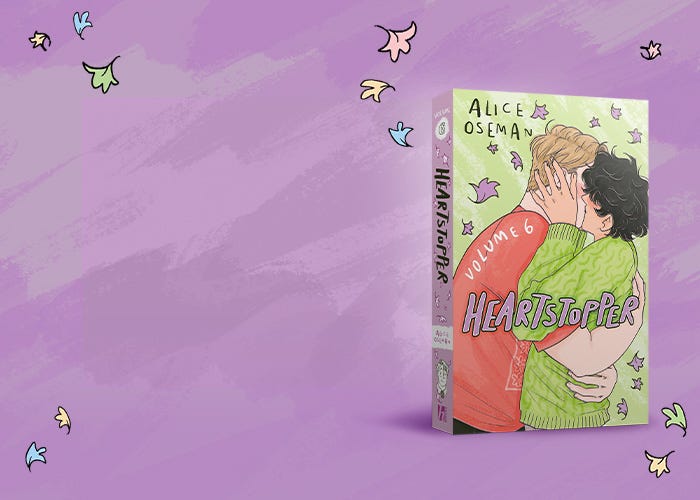
I’m a bad librarian, but I had to nab the copy of Heartstopper: Volume Six as soon as it arrived at school, long before the kids could get their hands on it. Librarian privileges!
This final instalment sees Charlie campaigning to become head boy while Nick prepares to leave for university and begins to wonder who he will be without Charlie beside him. It’s a tender and fitting conclusion to the series, capturing all the uncertainty of that moment when teenage love collides with the enormous changes of early adulthood. Alice Oseman gives these beloved characters a send-off that feels hopeful without pretending that growing up or staying together is simple. As someone who is still with my high school boyfriend after twenty years of ups and downs, I may have cried once or twice…
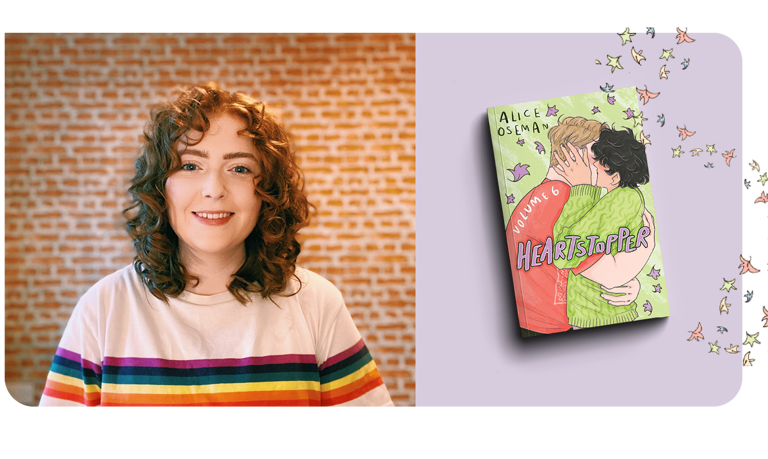
I also went ahead and bought tickets to see Alice Oseman live in Melbourne in October. There are still spots available, but I doubt they’ll last long, so get in quickly if you’d like to come along!
I’ve started meeting with publishers to discuss possible authors for MWF Schools 2027, which is always great fun because I get intel on what’s coming out over the next twelve months. Advance copies have started arriving in the post, and Betsy and Bon by Simon Howe immediately caught my attention for its sweet storytelling and whimsical format.
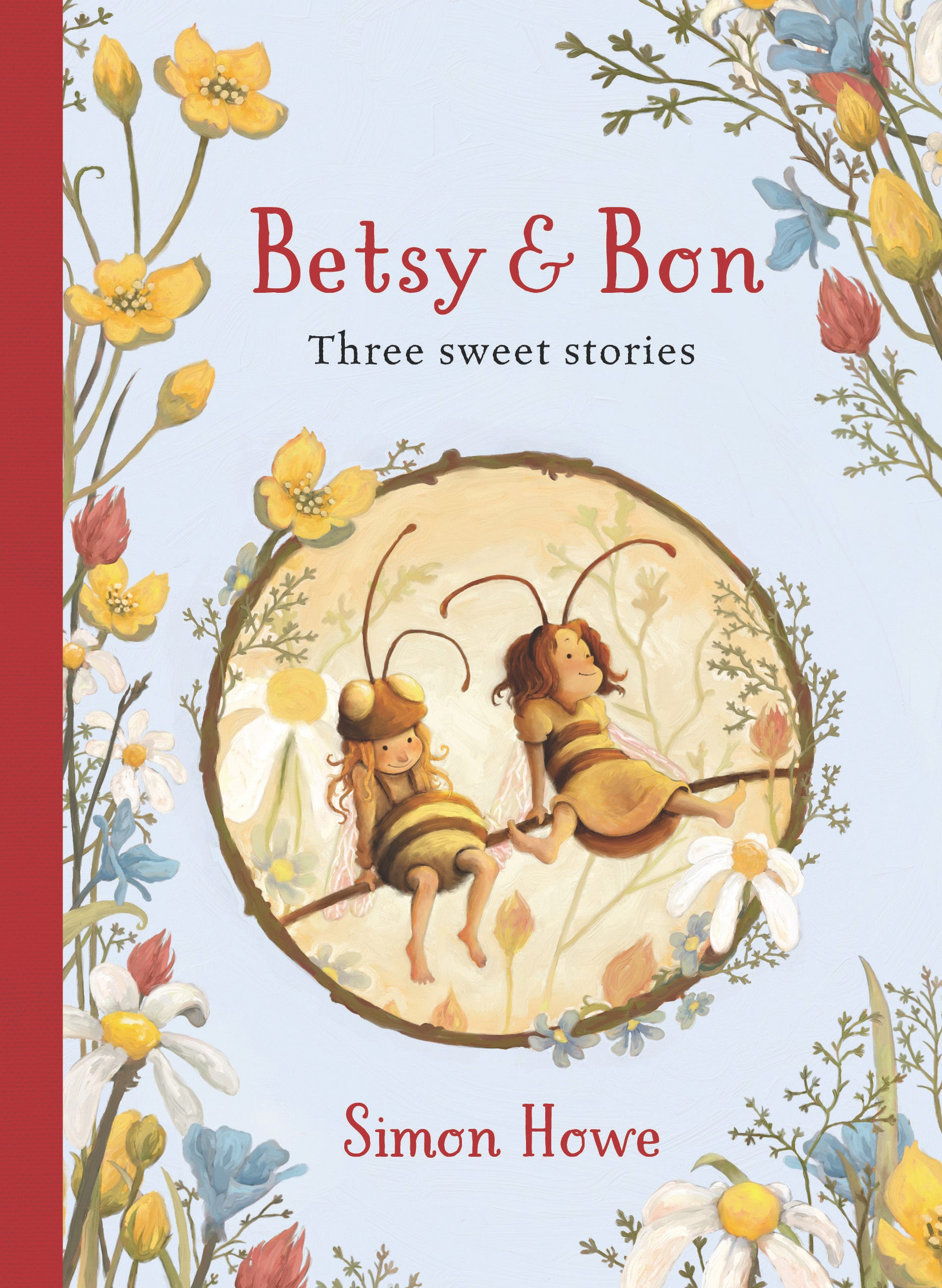
This beautiful little picture-book-meets-chapter-book follows Betsy and Bon as they play at the bottom of the garden, searching for bees to inhabit their hive and picnicking in the sunshine. The stories are gentle and low-conflict, but full of small negotiations, discoveries and imaginative possibilities. With its full-colour illustrations and short, self-contained adventures, it would be perfect for children transitioning into independent reading, or little ones eager to try a “big kid” book with an adult beside them. It’s out in September.
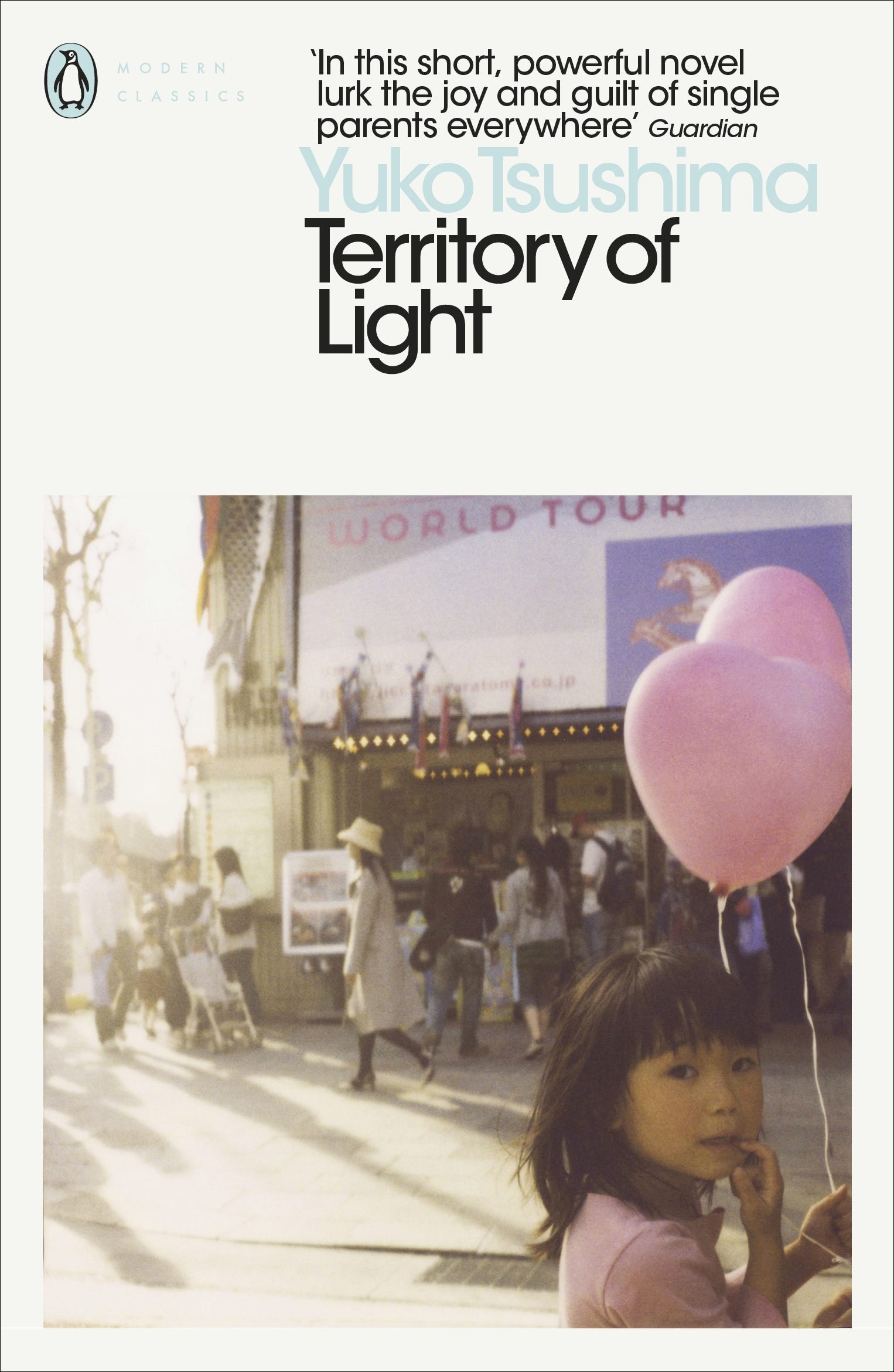
Territory of Light by Yuko Tsushima was recommended on a podcast I listened to recently as a short novel that says an enormous amount about motherhood, separation and the complicated freedoms of starting again. Set across twelve months, it follows a woman living alone in Tokyo with her two-year-old daughter after the breakdown of her marriage.
This was the perfect plane book: gentle, poetic and quietly powerful. It captures both the fierce intimacy of motherhood and the exhaustion, resentment and loneliness that can exist alongside it, without flattening any of those feelings into easy judgement. I highly recommend it as a book you can read in one sitting but won’t stop thinking about for a long time afterwards.


Some other adult reading I did: A Good Person by Kirsten King and Female, Nude by Rhiannon Lucy Cosslett. I tend to read more adult fiction on holiday, and these two are definitely that!
A Good Person is a dark and disturbing spiral into the mind of Lillian, a narcissistic, delusional and frequently hilarious narrator who may be one of the most unlikeable protagonists I’ve encountered. After the man she is seeing ends their situationship, Lillian puts a hex on him… and then he actually dies. What follows is a mixture of psychological thriller, murder mystery and very black comedy. I spent much of it recoiling from Lillian’s choices while texting a friend who was reading it at the same time to talk about how much we loved it.
Female, Nude, on the other hand, is a sexy summer novel set on a Greek island. Sophie is an artist caught between her partner’s desire to have a baby and her own fear that motherhood might require her to sacrifice her creative life. The novel explores ambition, friendship, motherhood and the complicated business of looking and being looked at. I’ve seen it described as “a beach read with a brain”, which is spot on. It’s sun-soaked and propulsive, but also genuinely interested in the compromises women are expected to make between art, relationships and family.


At the AATE Conference, I also did some book shopping courtesy of Dymocks Busselton, which is run by the mother of a girl I went to high school with. That’s WA for you!
I was especially taken with several collections of very short writing published by Western Australian independent publisher Night Parrot Press. I know I’ve just wanged on above about pushing back against declining attention spans, but flash fiction and micro memoir aren’t lesser forms of reading. At their best, these forms demonstrate how much precision, emotional weight and narrative surprise can be compressed into a tiny space.
I bought Crybaby by Mabel Gibson, Ourselves: 100 Micro Memoirs and Three Can Keep a Secret, and I’ve loved dipping into the local writing collected across them. Yamatji writer Mabel Gibson’s Crybaby traces childhood, identity, love, grief and mental health through a series of raw and vivid micro memoirs. Ourselves brings together one hundred writers telling true stories in no more than 750 words, while Three Can Keep a Secret collects one hundred pieces of flash fiction by established and emerging Western Australian writers. Across these books, whole lives and relationships emerge in only a page or two.
They would also make excellent mentor texts for senior students. Their length makes each piece approachable, but it also allows students to examine every choice a writer has made: where the story begins, which details are included, what remains unsaid and how an ending can reverberate beyond a final sentence. I’ll be buying copies for my library in due course.
Curiouser and curiouser: reflections from AATE 2026
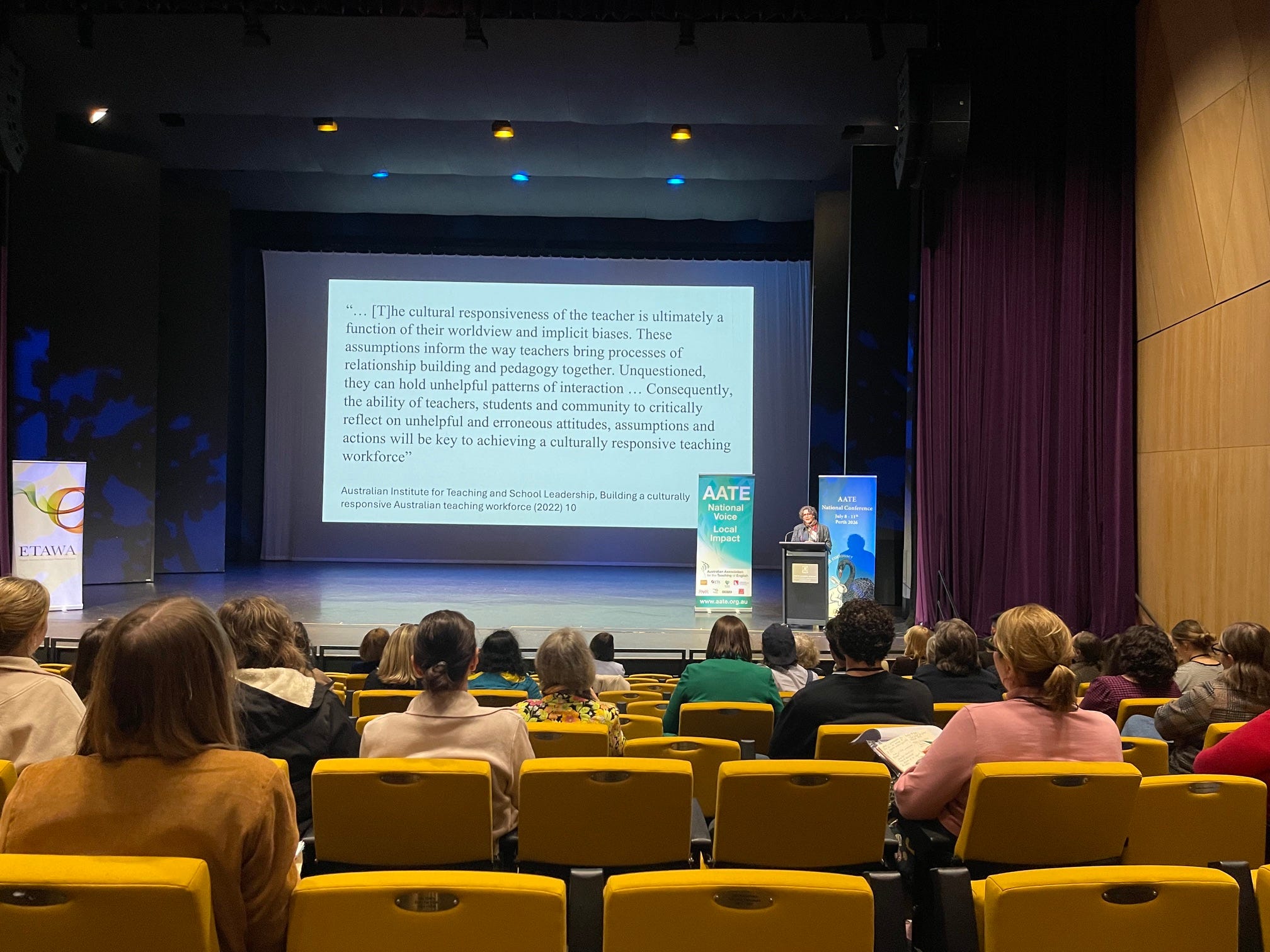
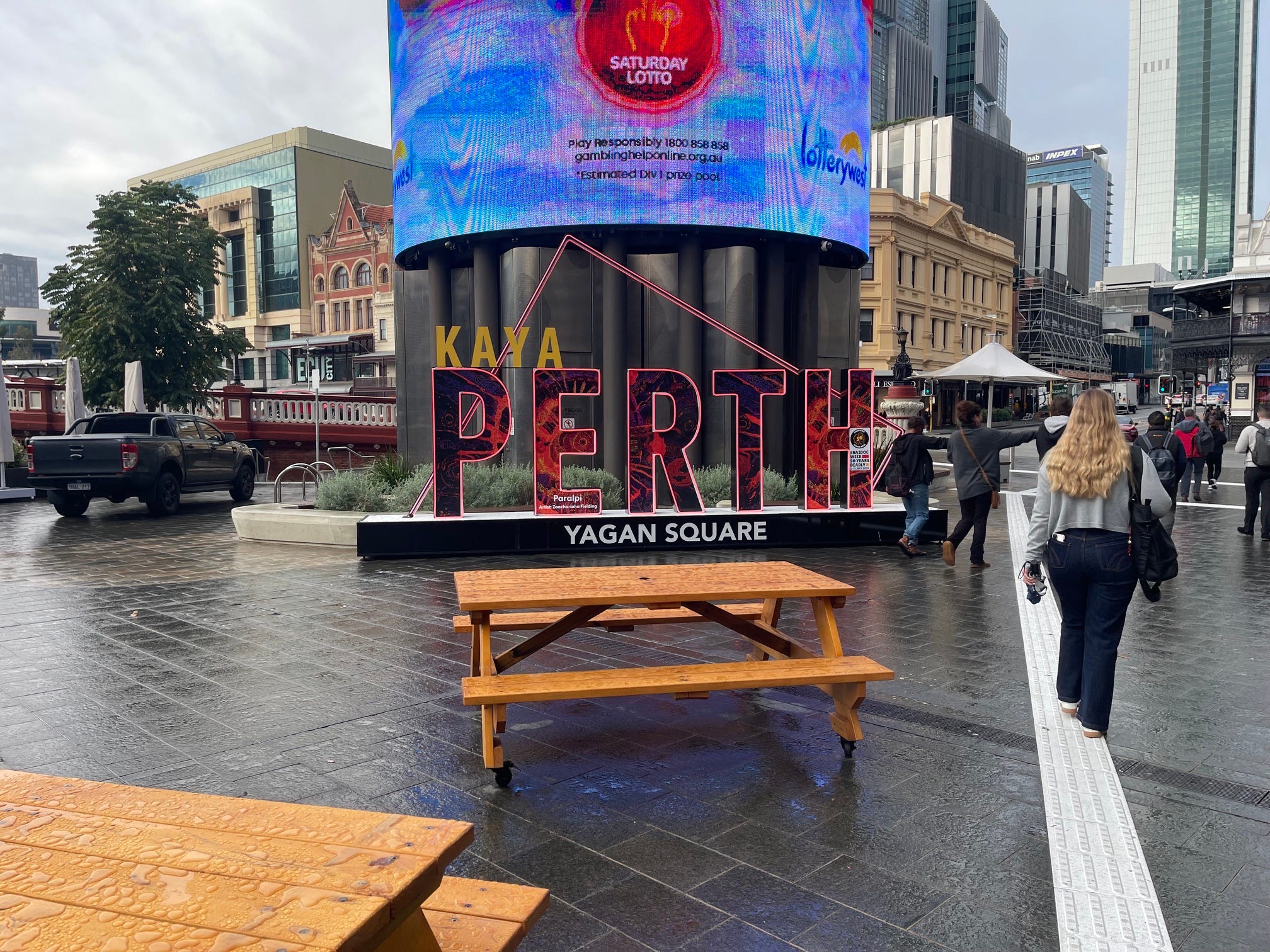
Last week I headed west for the Australian Association for the Teaching of English (AATE) National Conference in Perth. The weather was glorious (although the locals insisted it was freezing) and for four days I found myself surrounded by English teachers from across the country asking questions about where the subject is heading. This year’s theme, Curiouser and Curiouser, invited educators to keep asking questions rather than rushing towards easy answers. It was a fitting challenge for a profession sitting at the centre of so many current debates. And after my conversations at Deakin, I arrived with plenty of difficult questions of my own.
